
Symptoms — Blackouts & Collapse
Syncope & Collapse — Finding the Cause
Syncope — a sudden, brief loss of consciousness — is frightening for patients and witnesses alike. While most episodes have a benign cause, some represent a warning sign of serious cardiac disease. Expert evaluation is essential to tell the difference and to prevent recurrence.

Understanding the Symptom
What Is Syncope?
Syncope — commonly called a blackout or faint — is a transient, complete loss of consciousness caused by a temporary reduction in blood flow to the brain. It has a rapid onset, is brief, and is followed by spontaneous and full recovery. This distinguishes it from a seizure or stroke.
Syncope is extremely common, affecting around one in three people at some point in their lifetime. The vast majority of episodes are harmless vasovagal faints triggered by standing, heat, or anxiety. However, a significant minority are caused by cardiac arrhythmias or structural heart disease — conditions that can be life-threatening if left undiagnosed.
The key challenge — and the reason specialist evaluation matters — is that the history alone cannot always distinguish benign from dangerous syncope. A systematic approach using targeted investigations is needed to reach a confident diagnosis and guide safe treatment.

The Three Phases
Before, During & After
Recognising what happens in each phase — and telling Dr Nijjer about it in detail — is one of the most valuable tools for reaching the right diagnosis. No symptom is too trivial to mention.
Before (Pre-syncope)
Warning Symptoms
- Nausea or stomach discomfort
- Sweating, clamminess
- Visual greyout or tunnel vision
- Ringing in the ears
- Feeling of warmth or flushing
- Lightheadedness or weakness
- Heart racing or pounding beforehand
- No warning at all (important red flag)
During (The Episode)
Loss of Consciousness
- Complete or partial loss of consciousness
- Limpness and fall
- Pallor — face becomes very pale
- Brief jerking or twitching movements (from low blood flow, not always a seizure)
- Incontinence (can occur in both syncope and seizure)
- Eye deviation or roll
- Typical duration: seconds to 1–2 minutes
After (Recovery)
Coming Round
- Rapid return to full consciousness (unlike seizure)
- Fatigue and exhaustion
- Nausea persisting for minutes
- No significant confusion or disorientation
- Pallor followed by flushing
- Muscle ache if fallen
- Prolonged confusion suggests seizure, not syncope
Types of Syncope
Four Main Causes
Syncope is not a diagnosis — it is a symptom with many possible causes. Understanding which category you fall into determines every subsequent investigation and treatment decision.
Most Common
Vasovagal (Reflex) Syncope
The classic faint — triggered by a nerve reflex that causes the heart to slow and blood vessels to dilate simultaneously, causing a sudden drop in blood pressure. Usually benign and self-limiting.
- Prolonged standing, heat, or crowded spaces
- Pain, medical procedures, or anxiety
- Typically preceded by nausea, sweating, and visual greyout
- More common in younger adults and adolescents
- Usually recovers quickly once lying flat
Requires Urgent Assessment
Cardiac Syncope
Caused by a sudden disturbance in the heart's rhythm (arrhythmia) or by structural heart disease severely limiting cardiac output. This is the most important cause to exclude — it can be a precursor to sudden cardiac death.
- Arrhythmias: heart block, ventricular tachycardia, sick sinus syndrome, SVT
- Structural: severe aortic stenosis, hypertrophic cardiomyopathy
- Genetic conditions: long QT syndrome, Brugada syndrome
- Often without warning — sudden onset and rapid recovery
- May occur during exercise or at rest/lying flat
Position-Related
Orthostatic Hypotension
A fall in blood pressure when standing up, as the body's compensatory mechanisms fail to maintain adequate cerebral perfusion. Common in older patients and those on certain medications.
- Symptoms occur within seconds to minutes of standing
- Common causes: dehydration, medications (anti-hypertensives, diuretics, antidepressants)
- Autonomic failure in diabetes or Parkinson's disease
- Worsened by prolonged bed rest or hot environments
- Blood pressure drop of ≥20mmHg systolic on standing confirms diagnosis
Trigger-Specific
Situational Syncope
A subtype of reflex syncope triggered by a specific, reproducible action or stimulus that activates a nerve reflex pathway leading to a drop in blood pressure or heart rate.
- Cough syncope — during or immediately after coughing
- Micturition syncope — during or after passing urine
- Swallowing syncope — triggered by swallowing
- Carotid sinus syncope — head turning, tight collar
- Post-exercise syncope — immediately after stopping vigorous exercise
When to Act Urgently
Cardiac Warning Signs
Most syncopal episodes are not dangerous, but certain features strongly suggest a cardiac cause that demands urgent investigation. If any of the following apply, you should seek prompt specialist assessment — do not wait for a routine appointment if symptoms are frequent or have occurred during exertion.
Red Flag Features Requiring Prompt Assessment
These features suggest a cardiac cause and should not be ignored
Syncope during exertionCollapse while exercising — not after — is a critical warning sign of structural disease such as hypertrophic cardiomyopathy or severe aortic stenosis.
No warning prodromeSudden, instantaneous loss of consciousness without nausea or visual changes is characteristic of a cardiac arrhythmia.
Palpitations immediately before collapseA racing or irregular heartbeat in the seconds before syncope strongly suggests a tachyarrhythmia such as ventricular tachycardia.
Syncope lying down or at restA simple vasovagal faint does not typically occur when supine. Syncope at rest strongly suggests arrhythmia.
Family history of sudden cardiac deathGenetic arrhythmia syndromes (long QT, Brugada, ARVC, HCM) carry familial risk — syncope in this context requires urgent evaluation.
Known structural heart diseaseAny syncope in a patient with previously diagnosed heart disease, heart failure, or cardiomyopathy warrants urgent investigation.
Abnormal ECGFindings such as prolonged QT interval, Brugada pattern, pre-excitation (WPW), or significant conduction abnormality indicate heightened risk.
Recurrent unexplained episodesMultiple blackouts without a confirmed benign cause should never be left uninvestigated, regardless of apparent triggers.
If you or someone you know has experienced syncope during exercise or without any warning, call the clinic directly on 0203 983 8001. Urgent assessment can usually be arranged within 48 hours.
Preparing for Your Appointment
What to Tell Dr Nijjer
The more precisely you can describe your episode — and the more detail a witness can provide — the more targeted the investigation. If someone witnessed your collapse, bring them to the appointment or ask them to write down what they observed.
?
Did you have any warning — nausea, sweating, vision changes, or palpitations — before losing consciousness? If so, how long before?
?
What were you doing when it happened? Standing, exercising, sitting, or lying flat?
?
How quickly did you recover and feel back to normal? Were you confused or drowsy for a period afterwards?
?
Did a witness observe any jerking, tongue biting, eye deviation, or incontinence during the episode?
?
Have you had similar episodes before, and if so, how frequently? Any pattern or clear trigger?
?
Is there any family history of fainting, blackouts, unexplained sudden death, or inherited heart conditions?
Diagnostic Pathway
How Dr Nijjer Investigates
Investigation begins with a detailed history and physical examination — including lying and standing blood pressure measurements, which can diagnose orthostatic hypotension on the spot. A 12-lead ECG is performed at the initial consultation.
Further tests are selected based on the clinical picture, with the aim of either capturing an arrhythmia during a spontaneous episode or provoking and characterising the mechanism responsible for syncope.
- 12-Lead ECG First-line investigation. Identifies arrhythmias, conduction disease, QT prolongation, Brugada pattern, WPW, and signs of structural disease. Learn more →
- Ambulatory ECG 24-hour to 14-day external Holter monitoring to capture paroxysmal arrhythmias not seen on a resting ECG. Ideal when episodes occur at least weekly. Learn more →
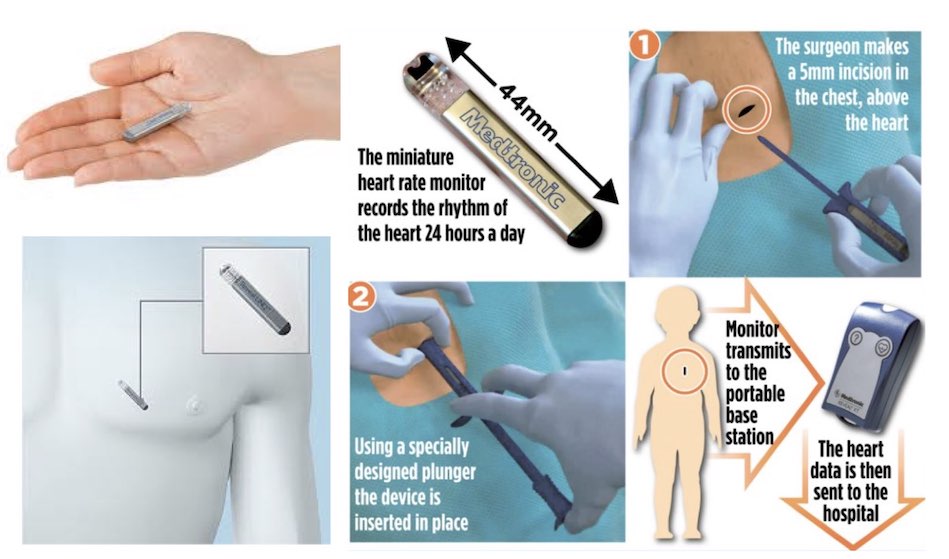
- Loop Recorder A small device implanted under the skin that continuously monitors heart rhythm for up to three years — the gold standard for infrequent unexplained syncope. Learn more →
- Echocardiogram Ultrasound assessment of heart structure and function — identifies cardiomyopathy, valvular disease (particularly aortic stenosis), and reduced ejection fraction. Learn more →
- Tilt Table Test Controlled tilting to a head-up position to provoke vasovagal syncope and assess autonomic responses — the diagnostic standard for reflex and orthostatic syncope. Learn more →
- Cardiac MRI Detailed structural imaging to identify cardiomyopathy, infiltrative disease, scar tissue, and ARVC — conditions that predispose to lethal arrhythmia. Learn more →
Management
Treating the Cause
Treatment is entirely dependent on the underlying cause. Reaching the correct diagnosis is therefore the most important step — it prevents unnecessary treatment for benign syncope and ensures patients with serious cardiac causes receive timely intervention.
Vasovagal & Reflex
Lifestyle & Physical Measures
- Recognition and avoidance of individual triggers
- Increased fluid and salt intake to expand blood volume
- Physical counter-pressure manoeuvres (leg crossing, muscle tensing) at prodrome onset
- Compression stockings for orthostatic component
- Medication in selected cases: midodrine, fludrocortisone, beta-blockers
- Pacemaker implantation if cardioinhibitory (severe slowing) component is documented
Cardiac Arrhythmia
Targeted Cardiac Therapy
- Pacemaker implantation for symptomatic bradycardia or heart block
- Antiarrhythmic medication for tachyarrhythmias
- Catheter ablation for SVT or appropriate VT substrates
- ICD (implantable cardioverter-defibrillator) for high-risk ventricular arrhythmia
- Medication review — stopping or reducing offending drugs
- Treatment of underlying structural disease driving arrhythmia
Orthostatic Hypotension
Postural Management
- Medication rationalisation — reducing or stopping causative drugs
- Postural advice: slow rising, sitting at edge of bed before standing
- Increased fluid and salt intake
- Compression garments
- Midodrine or fludrocortisone where appropriate
- Treatment of underlying autonomic disorder
Situational Syncope
Trigger Avoidance & Education
- Education about the mechanism and likely benign prognosis
- Modification of triggering activity where possible
- Pacing for carotid sinus hypersensitivity (cardioinhibitory type)
- Lifestyle adjustments for cough, micturition, and swallowing syncope
- Driving restrictions advised until trigger is managed safely
Related Conditions & Investigations
You May Also Be Interested In
Experienced an Unexplained Blackout?
Syncope should never be dismissed as simply a faint without expert evaluation. Dr Nijjer offers comprehensive cardiac assessment for blackouts and collapse — with urgent slots available within 48 hours for those with concerning features.