Expert London Cardiologist for your Heart Health

68 Harley Street London, W1G 7HE · Main Office
Also at Cromwell & Syon Bishops Wood · Multiple Locations
0203 9838 001 Call for Appointments
jessica@oneheartclinic.com Rapid Response to Enquiries
Dr Nijjer — Cardiac Medications Guide Preview
Patient Guide
18 minute read

Your Cardiac Medications Explained

A clear guide to the most commonly prescribed heart medications — what they do, how to take them, and what side effects to watch for. Click on any medication to expand the full details.
Rx
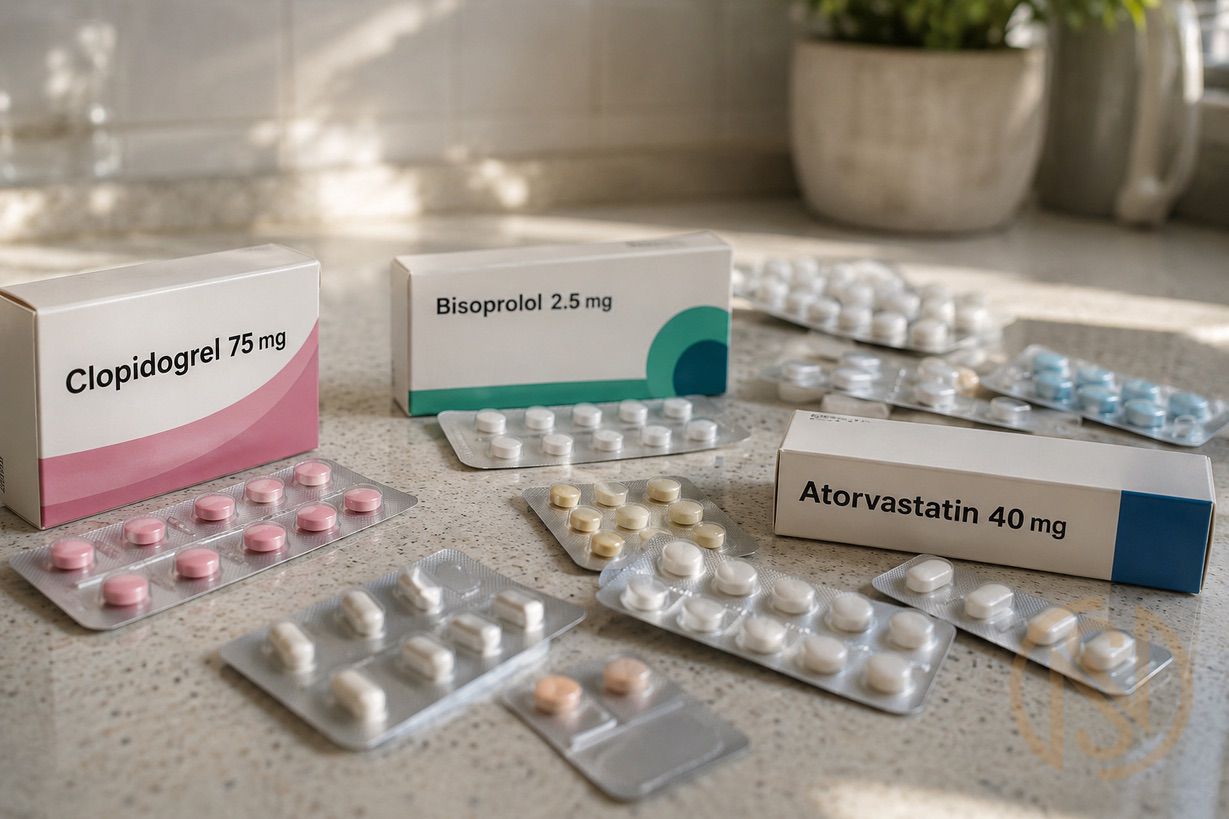
Cardiac medications explained — Dr Nijjer, Harley Street Cardiologist
Key Takeaways

Before reading this guide

  • Cardiac medications save lives — adherence to prescribed treatment is one of the most impactful things you can do for your heart health.
  • Never stop a heart medication without speaking to your cardiologist first — abrupt withdrawal of beta-blockers, antiplatelets, and anticoagulants can cause serious harm.
  • Most side effects are dose-dependent and often improve over the first few weeks. Contact your team if side effects are severe or persistent.
  • Always tell every healthcare provider — including dentists, surgeons, and pharmacists — every medication you take, including supplements and over-the-counter medicines.
  • Many cardiac medications interact with common drugs including ibuprofen, antibiotics, and herbal supplements. Ask before adding anything new.
  • Click on any medication card below to expand the full details including doses, timing, common and unusual side effects.
Why taking your medications correctly matters
50%
of patients do not take long-term medications as prescribed
Non-adherence accounts for up to 125,000 preventable deaths
annually in the USA alone — WHO Report
25%
reduction in cardiovascular mortality from statin therapy
CTT meta-analysis of 26 trials, 170,000 patients —
benefit only realised with consistent daily use
3×
higher risk of stent thrombosis if antiplatelet therapy stopped early
Stopping clopidogrel or ticagrelor prematurely after stenting
is one of the most preventable causes of sudden cardiac death
Quick reference

Medications by heart condition

Each heart condition has a set of evidence-based medications that are used first. Find your condition below, then scroll down to expand the full details of each drug.

Heart Failure

Heart Failure

HFrEF — reduced ejection fraction
  • Entresto (sacubitril/valsartan) — replaces ACEi, reduces mortality 20%
  • Bisoprolol or Carvedilol — beta-blocker, reduces sudden death risk
  • Spironolactone or Eplerenone — reduces hospital admissions 30%
  • Dapagliflozin or Empagliflozin — SGLT2 inhibitor, newest pillar
  • Furosemide — for fluid/oedema symptom control
Heart failure guide
After Stenting / Heart Attack

After Stenting

Post-PCI / post-ACS mandatory therapy
  • Aspirin 75mg — lifelong after stenting
  • Ticagrelor 90mg or Clopidogrel 75mg — dual antiplatelet with aspirin
  • Atorvastatin 80mg — high-intensity statin, start immediately
  • Bisoprolol — post-MI cardioprotection
  • Ramipril — ACEi post-MI, especially if EF reduced
Angioplasty guide
Atrial Fibrillation

Atrial Fibrillation

Rate control + stroke prevention
  • Apixaban or Rivaroxaban — NOAC anticoagulation for stroke prevention
  • Bisoprolol — rate control, first choice
  • Digoxin — rate control in heart failure with AF
  • Amiodarone — rhythm control, post-cardioversion
  • Flecainide — rhythm control (only if no structural heart disease)
AF guide
High Blood Pressure

Hypertension

Stepped therapy — often needs 2–3 drugs
  • Amlodipine 5–10mg — first-line CCB
  • Ramipril or Lisinopril — ACEi, first or second line
  • Losartan or Candesartan — ARB, if ACEi causes cough
  • ExForge (amlodipine + valsartan) — combination for resistant hypertension
  • Indapamide — thiazide-like, add as third agent
Hypertension guide
High Cholesterol

High Cholesterol

Stepwise LDL reduction
  • Atorvastatin 20–80mg — most prescribed; 10mg in low-risk
  • Rosuvastatin 10–40mg — higher potency per mg than atorvastatin
  • Ezetimibe 10mg — add on; reduces LDL a further 20–25%
  • Evolocumab (Repatha) — injectable PCSK9i for very high-risk
  • Inclisiran (Leqvio) — twice-yearly injection in clinic
Cholesterol guide
Angina

Angina

Acute relief + prophylaxis
  • GTN spray — 400mcg sublingual for acute attacks
  • Bisoprolol — first-line prophylaxis; reduces frequency
  • Amlodipine — CCB; use alone or add to beta-blocker
  • Isosorbide mononitrate — long-acting nitrate prophylaxis
  • Ivabradine or Ranolazine — for refractory angina
Angina guide
Medication reference

All cardiac medications — click to expand

Each entry below shows the drug name, brand names, and what it is used for. Click the card to reveal full details: doses, timing, common side effects, unusual side effects, and important warnings.

Blood Pressure Medications 8 medications

Doses & Timing

DrugStarting doseMaximum
Ramipril1.25–2.5mg once daily10mg once daily
Lisinopril2.5–5mg once daily40mg once daily
Perindopril2mg once daily8mg once daily

When to take: Once daily at any consistent time. Evening dosing can reduce first-dose dizziness. Take with or without food.

Monitoring: Blood test for potassium and kidney function (creatinine/eGFR) 1–2 weeks after starting and after each dose increase. A small rise in creatinine (up to 30%) is expected and acceptable.

Common Side Effects

  • Dry, persistent cough — affects approximately 1 in 5 patients. Caused by accumulation of bradykinin. Does not indicate harm — if troublesome, switch to an ARB.
  • Dizziness or light-headedness, especially on standing (postural hypotension)
  • Raised potassium (hyperkalaemia) — usually mild but monitored
  • Fatigue, especially on starting

Unusual Side Effects

  • Angioedema — sudden swelling of lips, tongue, or throat. Rare (0.1–0.5%) but a medical emergency. Stop immediately and call 999. More common in Afro-Caribbean patients.
  • Acute kidney injury — most commonly triggered by dehydration, illness, or NSAIDs alongside ACEi ("triple whammy" with diuretic)
  • Metallic taste or loss of taste (ageusia) — usually temporary
  • Raised liver enzymes — rare

Important: Avoid ibuprofen and naproxen (NSAIDs) while on ACEi — the combination significantly increases kidney injury risk. Use paracetamol for pain instead.

Doses & Timing

DrugStarting doseMaximum
Losartan25–50mg once daily100mg once daily
Candesartan4–8mg once daily32mg once daily
Valsartan40–80mg once daily320mg once daily

When to take: Once daily at any consistent time, with or without food. Same monitoring as ACEi — potassium and kidney function check 1–2 weeks after starting.

No cough: ARBs block the angiotensin receptor but do not cause bradykinin accumulation — so they do not cause the dry cough seen with ACEi. They are the preferred alternative if cough is intolerable on an ACEi.

Common Side Effects

  • Dizziness, light-headedness on standing
  • Raised potassium (hyperkalaemia)
  • Fatigue on initiation
  • Headache

Unusual Side Effects

  • Angioedema — rare (much less common than with ACEi, but can occur). Stop immediately and seek emergency care if lip/tongue swelling develops. Do NOT switch to an ARB if angioedema occurred on an ACEi.
  • Acute kidney injury — same risk as ACEi with NSAID combination
  • Olmesartan: sprue-like enteropathy — chronic diarrhoea, weight loss (rare but distinctive — resolves on stopping)

Do not combine: ACEi and ARB together — increases hyperkalaemia and kidney injury without added benefit (ONTARGET trial). Entresto (sacubitril/valsartan) replaces, not combines with, ACEi.

Doses & Timing

Strength (sacubitril/valsartan)Frequency
24/26mg — starting doseTwice daily
49/51mg — intermediateTwice daily
97/103mg — target doseTwice daily

When to take: Twice daily, approximately 12 hours apart. Consistent timing is important. Take with or without food.

Switching from ACEi: A mandatory 36-hour washout after the last ACEi dose before starting Entresto. This prevents dangerously high bradykinin levels (angioedema risk).

Evidence: PARADIGM-HF trial (8,442 patients) — Entresto reduced cardiovascular death and heart failure hospitalisations by 20% compared with enalapril. It is now the preferred agent over ACEi/ARB in HFrEF.

Common Side Effects

  • Low blood pressure (hypotension) — very common on starting; usually improves. Rise slowly from sitting/lying.
  • Dizziness, light-headedness
  • Raised potassium — monitor as for ACEi
  • Mild cough (less than ACEi)
  • Raised creatinine on initiation (small rise acceptable)

Unusual Side Effects

  • Angioedema: Risk is significantly higher if you have ever had angioedema on an ACEi. This is an absolute contraindication to Entresto. If lip/tongue swelling occurs — stop immediately and call 999.
  • Hyperkalaemia — particularly if also on spironolactone/eplerenone

Never combine with an ACEi — must be a replacement, not an addition. Minimum 36-hour gap after stopping ACEi before first Entresto dose.

Doses & Timing

DrugStarting doseMaximum
Amlodipine5mg once daily10mg once daily
Felodipine2.5–5mg once daily10mg once daily
Nifedipine LA30mg once daily90mg once daily

When to take: Once daily at any consistent time. Amlodipine has a very long half-life (~35 hours) — if you miss a dose, take it as soon as you remember unless it is nearly time for the next one. Food does not affect absorption.

Ankle swelling: The most common reason patients ask to stop amlodipine. It is caused by vasodilation (not fluid retention) — so diuretics don't help much, but adding an ACEi/ARB significantly reduces it. Reducing the dose also helps.

Common Side Effects

  • Ankle/lower leg swelling (oedema) — affects up to 1 in 3 at 10mg. More common in women and in warmer weather. Usually worse by evening.
  • Flushing and warmth — particularly in the first few weeks
  • Headache — especially on starting; usually settles
  • Palpitations / slight increase in heart rate
  • Dizziness

Unusual Side Effects

  • Gingival hyperplasia (gum overgrowth) — particularly nifedipine; good dental hygiene reduces risk
  • Worsening of acid reflux (GORD)
  • Photosensitivity
  • Reflex tachycardia — more common with short-acting nifedipine (not the LA formulation)

Doses & Timing

DrugTypical doseFrequency
Diltiazem MR90–360mgOnce or twice daily
Verapamil SR120–480mgOnce or twice daily

When to take: With food to reduce GI side effects. Diltiazem comes in many different brand formulations (Tildiem, Adizem, Dilzem, Viazem) — these are NOT interchangeable. Always take the specific brand prescribed and do not switch without your pharmacist's or cardiologist's advice.

Critical warning: Verapamil must NEVER be combined with a beta-blocker (e.g. bisoprolol, atenolol) without very careful cardiology supervision. The combination can cause complete heart block (the heart's electrical system stops) — a potentially fatal emergency.

Common Side Effects

  • Constipation (verapamil) — very common; affects the majority of patients. Increase fluid and fibre intake; consider a laxative if needed.
  • Bradycardia (slow pulse) — both drugs slow the heart rate; contact your team if pulse is consistently below 50
  • Dizziness, ankle swelling (less than amlodipine)
  • Nausea, headache

Unusual Side Effects

  • Heart block — slowing of the heart's electrical conduction system. Risk greatly increased when combined with beta-blockers.
  • Worsening of heart failure with reduced ejection fraction — these drugs reduce cardiac contractility; avoid in HFrEF
  • Gingival hyperplasia (gum overgrowth — less common than with nifedipine)
  • Verapamil raises digoxin levels — if on both, digoxin level must be monitored

Doses & Timing

Strength (amlodipine/valsartan)Frequency
5mg/80mg, 5mg/160mgOnce daily
10mg/160mg, 10mg/320mgOnce daily

When to take: Once daily at any consistent time, with or without food. The fixed combination simplifies the regimen and improves adherence compared with taking two separate tablets.

ExForge HCT also exists — a triple combination adding hydrochlorothiazide (a diuretic). This is used in resistant hypertension requiring three drug classes simultaneously.

Common Side Effects

  • Ankle swelling — from the amlodipine component (see Amlodipine card)
  • Dizziness on standing (postural hypotension) — particularly in warm weather or after exercise
  • Headache, flushing
  • Raised potassium — from the valsartan component (monitor as for ARBs)

Unusual Side Effects

  • Angioedema — from the valsartan (ARB) component. Rare but stop immediately if swelling of lips/tongue/throat occurs.
  • Acute kidney injury — same NSAID interaction risk as all ARBs
  • Fatigue

Doses & Timing

DrugStarting doseMaximum
Bisoprolol1.25mg once daily10mg once daily
Carvedilol3.125mg twice daily25mg twice daily
Atenolol25mg once daily100mg once daily
Nebivolol1.25mg once daily10mg once daily

When to take: Morning, once daily (bisoprolol, atenolol, nebivolol). Carvedilol twice daily with food — food slows absorption and reduces dizziness. Do not stop abruptly — reduce gradually over 2–4 weeks.

Never stop suddenly: Abrupt withdrawal causes rebound increase in heart rate and blood pressure and can trigger angina or heart attack in susceptible patients. Always reduce gradually under medical supervision.

Common Side Effects

  • Fatigue and reduced exercise tolerance — very common on starting; often improves over 4–8 weeks as the body adjusts
  • Cold hands and feet — beta-blockade reduces peripheral circulation
  • Dizziness, light-headedness
  • Sexual dysfunction (erectile dysfunction) — consider switching to nebivolol (vasodilatory properties, better profile)
  • Vivid dreams and nightmares — more common with lipophilic agents (bisoprolol, metoprolol)

Unusual Side Effects

  • Worsening of Raynaud's phenomenon
  • Bronchospasm — beta-blockers can worsen asthma. Use with caution in COPD (bisoprolol is cardioselective and safer). Avoid in active asthma.
  • Masking hypoglycaemia in Type 1 diabetes — tremor and tachycardia (warning signs of low blood sugar) are blunted; sweating still occurs
  • Depression — association reported; switch if new depressive symptoms develop

Doses & Timing

DrugDoseFrequency
Indapamide SR1.5mgOnce daily
Bendroflumethiazide2.5mgOnce daily
Hydrochlorothiazide12.5–25mgOnce daily

When to take: Morning — avoids increased urination during the night. Take with or without food. Indapamide (particularly the SR/modified-release formulation) is preferred over older thiazides for its better cardiovascular outcome data.

Blood tests: Check sodium and potassium 4–6 weeks after starting. Low potassium (hypokalaemia) can cause dangerous heart rhythm abnormalities and may require potassium supplementation or adding a potassium-sparing diuretic.

Common Side Effects

  • Increased urination, especially in the first few weeks
  • Low sodium (hyponatraemia) — dizziness, confusion, nausea — more common in elderly
  • Low potassium (hypokalaemia) — muscle cramps, weakness
  • Dizziness, postural hypotension
  • Thirst, dry mouth

Unusual Side Effects

  • Gout — thiazides reduce uric acid excretion. If you have a history of gout, discuss this with your doctor before starting.
  • Worsening of blood sugar control (hyperglycaemia) in diabetes or pre-diabetes
  • Impotence / sexual dysfunction
  • Photosensitivity — avoid prolonged sun exposure or use high SPF
  • Raised calcium (hypercalcaemia) — usually mild; useful in osteoporosis
Heart Failure Medications 3 medications

Doses & Timing

DrugTypical doseFrequency
Furosemide20–80mg (up to 500mg in severe HF)Once or twice daily
Bumetanide0.5–5mgOnce daily

When to take: Morning — or morning and early afternoon if twice daily. Never take in the evening or you will be awake urinating through the night. If you miss a morning dose, take it by lunchtime — skip it if later than that.

Self-monitoring: Weigh yourself every morning after using the toilet, before eating. If your weight rises by more than 2kg in 2 days — increase your furosemide by 20–40mg and contact your heart failure team. Sustained weight gain is a sign of fluid accumulating.

Common Side Effects

  • Frequent urination — particularly in the 2–4 hours after taking. This is the intended effect.
  • Dehydration and thirst — if severe (dry mouth, dark urine, dizziness on standing) contact your team
  • Low potassium (hypokalaemia) — muscle cramps, weakness, palpitations. May need potassium supplements or combination with spironolactone
  • Low sodium (hyponatraemia) — more common at higher doses or in elderly

Unusual Side Effects

  • Hearing loss / tinnitus — at very high doses, especially with rapid IV injection. Not usually a concern with standard oral doses.
  • Gout — as with thiazides
  • Photosensitivity
  • Blood glucose elevation — mild

"Sick day rules": During vomiting, diarrhoea, or severe heat exposure — temporarily reduce or stop furosemide and increase fluid intake. Dehydration plus diuretics can cause acute kidney injury. Contact your team if unsure.

Doses & Timing

DrugHF doseFrequency
Spironolactone25–50mgOnce daily
Eplerenone25–50mgOnce daily

When to take: Once daily in the morning or evening — consistently with food. Eplerenone is more selective (fewer hormonal side effects) and is preferred in men who develop gynaecomastia on spironolactone.

Monitoring: Potassium and kidney function 1 week after starting and after each dose change. Potassium above 5.5 mmol/L — reduce dose. Above 6.0 mmol/L — stop and contact your team urgently.

Common Side Effects

  • Raised potassium (hyperkalaemia) — the most important side effect to monitor. Potassium rises occur especially when combined with ACEi/ARB/Entresto.
  • Dizziness, low blood pressure — especially on standing
  • Increased urination (mild diuretic effect)
  • Nausea, stomach upset

Unusual Side Effects

  • Gynaecomastia (breast tissue growth in men) — common with spironolactone (up to 1 in 10). Can be painful. Switch to eplerenone if this occurs — it does not have this side effect.
  • Menstrual irregularities in women — spironolactone has anti-androgen effects
  • Reduced libido, erectile dysfunction
  • Leg cramps

Evidence: RALES trial — spironolactone 25mg reduced mortality by 30% in severe heart failure. EMPHASIS-HF — eplerenone reduced death and hospitalisation by 37% in mild heart failure.

Doses & Timing

DrugDoseFrequency
Dapagliflozin10mgOnce daily (morning)
Empagliflozin10mgOnce daily (morning)

When to take: Morning, with or without food. The morning is preferred because of mild diuretic effects — taking in the evening may cause overnight urination.

Sick day rules: Stop temporarily if you are acutely unwell, vomiting, fasting (e.g. before surgery), or severely dehydrated. Restart when eating and drinking normally. This reduces the risk of ketoacidosis.

Evidence: DAPA-HF and EMPEROR-Reduced — 25–26% reduction in CV death and heart failure worsening. Benefits apply whether or not the patient has diabetes. Now a standard part of all four recommended heart failure drug classes.

Common Side Effects

  • Genital thrush / mycotic infections — very common (the drug causes glucose to spill into urine, encouraging yeast growth). Keep the genital area clean and dry. Treat with standard antifungal cream or oral fluconazole.
  • Urinary tract infections
  • Increased urination, mild dehydration
  • Mild dizziness / low blood pressure
  • Urinary urgency

Unusual Side Effects

  • Euglycaemic diabetic ketoacidosis — DKA without elevated blood glucose. Rare but serious. Presents with nausea, vomiting, abdominal pain, difficulty breathing. Seek emergency care immediately. Risk highest during fasting, illness, or surgery.
  • Fournier's gangrene — necrotising fasciitis of the genitalia. Extremely rare but severe. Seek urgent care if there is any genital pain, swelling, redness, or fever.
  • Lower limb infections (in patients with diabetic foot disease)
Cholesterol Medications 3 medications

Doses & Timing

DrugDose rangeWhen to take
Atorvastatin10–80mg once dailyAny time
Rosuvastatin5–40mg once dailyAny time
Simvastatin10–40mg once dailyEvening
Pravastatin10–40mg once dailyEvening

Timing: Atorvastatin and rosuvastatin have long half-lives — take at any consistent time. Simvastatin and pravastatin are shorter-acting and are more effective taken in the evening (the liver makes most cholesterol overnight). Post-heart attack: atorvastatin 80mg is started immediately regardless of baseline cholesterol.

Evidence: CTT meta-analysis of 26 trials (170,000 patients) — each 1 mmol/L reduction in LDL reduces major CV events by 22%. The effect is consistent, linear, and sustained only with daily adherence.

Common Side Effects

  • Muscle aches (myalgia) — the most commonly reported side effect (5–10% in clinical practice). However, large placebo-controlled trials suggest much of this is a nocebo effect — participants on placebo reported similar rates of muscle aches when they knew they were taking a statin. A CK blood test distinguishes true muscle damage from aching.
  • Headache, nausea, GI upset — usually mild and transient
  • Elevated liver enzymes — mild rise common; significant hepatotoxicity very rare

Unusual Side Effects

  • Myositis / rhabdomyolysis — true muscle inflammation with significantly elevated CK. Rhabdomyolysis (severe muscle breakdown causing kidney failure) is very rare (<1 in 10,000). If muscles are very painful, dark brown urine, or extreme weakness — stop and seek urgent care.
  • Modest increase in Type 2 diabetes risk (~10% relative increase in those already predisposed) — benefits of statin vastly outweigh this risk in any patient with CV disease
  • Memory and cognitive complaints — reported by patients, but multiple large trials including HOPE-3 found no cognitive harm from statins
  • Interstitial lung disease — rare, more reported with rosuvastatin

If you have muscle aches: Do not simply stop — check CK blood test first. Often switching to a different statin (e.g. rosuvastatin 5–10mg), reducing dose, or alternate-day dosing resolves symptoms while maintaining benefit.

Doses & Timing

Ezetimibe 10mg — once daily at any consistent time, with or without food. There is only one dose. It can be taken at the same time as a statin for convenience.

Ezetimibe works in the gut, blocking NPC1L1 — the transporter that absorbs dietary and biliary cholesterol. It reduces LDL by a further 20–25% on top of statin therapy.

IMPROVE-IT trial: Adding ezetimibe to simvastatin further reduced LDL and produced a modest but significant reduction in major CV events (6.4% relative risk reduction over 7 years). Every LDL reduction counts.

Common Side Effects

  • Generally very well tolerated — one of the best-tolerated cardiac drugs
  • Occasional headache, GI upset, diarrhoea
  • Fatigue
  • Joint pain (arthralgia) — mild

Unusual Side Effects

  • Myopathy — rare; risk increases when combined with high-dose statin
  • Hepatitis — rare; liver function occasionally checked at baseline
  • Allergic skin reactions — rare
  • Pancreatitis — very rare

Doses & Timing

DrugDoseFrequency
Evolocumab140mg SCEvery 2 weeks (or 420mg monthly)
Alirocumab75–150mg SCEvery 2 weeks
Inclisiran284mg SCDay 1, Month 3, then every 6 months (given in clinic)

Self-injection: Evolocumab and alirocumab come as auto-injectors for home use (similar to insulin pens). Inclisiran is administered by a healthcare professional in clinic — making it the preferred option for patients who struggle with adherence.

FOURIER trial (evolocumab): 59% LDL reduction; 15% reduction in major CV events. NHS-funded for familial hypercholesterolaemia and secondary prevention patients above LDL thresholds despite maximum tolerated statin therapy.

Common Side Effects

  • Injection site reactions — redness, bruising, mild pain at injection site
  • Nasopharyngitis (cold-like symptoms)
  • Flu-like symptoms
  • Back pain, joint pain
  • Urinary tract infection

Unusual Side Effects

  • Neurocognitive effects — memory complaints and confusion have been reported in some patients. Large trials (FOURIER, ODYSSEY) found no statistically significant difference from placebo overall, but the FDA added a warning. Report any new memory problems to your cardiologist.
  • Allergic/hypersensitivity reactions — rare; discontinue if rash, hives, or difficulty breathing
Antiplatelet & Anticoagulant Medications 4 medications

Doses & Timing

75mg once daily — the standard UK secondary prevention dose. (300mg loading dose is given in hospital at time of heart attack or stroke.)

When to take: With or after food — significantly reduces gastric irritation. Take at any consistent time. Enteric-coated (EC) aspirin may reduce GI side effects further, though evidence is mixed.

PPI co-prescription: If you are over 65, have a history of GI problems, or are on dual antiplatelet therapy — a proton pump inhibitor (omeprazole 20mg once daily) should be prescribed alongside aspirin to reduce stomach bleeding risk.

Common Side Effects

  • GI upset, heartburn, nausea — take with food
  • Easy bruising, prolonged bleeding from minor cuts
  • Nosebleeds

Unusual Side Effects

  • GI haemorrhage — aspirin increases the risk of stomach and intestinal bleeding approximately 3-fold. Seek urgent medical attention for any black or tarry stools, vomiting blood, or severe abdominal pain.
  • Aspirin-exacerbated respiratory disease (AERD) — triggers bronchospasm in approximately 10% of asthmatics (and up to 30% with nasal polyps). If you have asthma, confirm with your cardiologist before taking aspirin.
  • Tinnitus — at high doses (not a concern at 75mg)
  • Allergy — urticaria, angioedema

Not for primary prevention: ARRIVE and ASPREE trials showed no net benefit (and possible harm) from aspirin in people without established cardiovascular disease. Aspirin for the heart is only recommended after a heart attack, stent, or ischaemic stroke.

Doses & Timing

DrugDoseFrequency
Clopidogrel75mgOnce daily
Ticagrelor90mg (year 1), 60mg (year 2+)Twice daily
Prasugrel10mg (5mg if >75 or <60kg)Once daily

When to take: Clopidogrel and prasugrel — once daily with or without food. Ticagrelor must be taken twice daily, 12 hours apart — missing doses significantly impairs antiplatelet effect.

Duration after stenting: 12 months for heart attack (ACS); 1–6 months for elective stenting depending on bleeding vs thrombosis risk. Your cardiologist will specify your duration.

Critical — do not stop without contacting your cardiologist. Stopping antiplatelet therapy early after stenting causes stent thrombosis — the stent suddenly clots, causing a heart attack that is often fatal. Even a brief pause (e.g. before dental work) requires prior cardiologist advice.

Common Side Effects

  • Easy bruising, prolonged bleeding from cuts
  • Nosebleeds, bleeding gums
  • Heavier menstrual periods
  • Headache (ticagrelor)

Unusual Side Effects

  • Clopidogrel — TTP (Thrombotic Thrombocytopenic Purpura): Very rare but potentially fatal. Presents within 2 weeks of starting with blood in urine, confusion, fever, and bruising. Stop immediately and seek emergency care.
  • Ticagrelor — dyspnoea (breathlessness): Affects approximately 1 in 7 patients. Not bronchospasm — exact mechanism unclear. Usually mild, often improves over weeks. Contact your team if severe — may need to switch to clopidogrel.
  • Ticagrelor — ventricular pauses (brief heart rhythm pauses) detected on Holter monitoring; rarely symptomatic
  • Prasugrel — avoid in patients over 75 or under 60kg (increased bleeding risk)
  • Gout — clopidogrel occasionally

Doses & Timing

DrugAF doseFrequency
Apixaban5mg (2.5mg if ≥2 criteria*)Twice daily
Rivaroxaban20mg with evening mealOnce daily
Dabigatran150mg (110mg if >80 or on verapamil)Twice daily
Edoxaban60mg (30mg if CrCl 15–50 or ≤60kg)Once daily

*Apixaban dose reduction criteria: age ≥80, weight ≤60kg, or creatinine ≥133 — reduce if ≥2 of these apply.

Rivaroxaban: Must be taken with the main evening meal — food increases absorption by 40%. This is critically important; taking it fasted greatly reduces blood levels.

Dabigatran: Keep in the original blister pack — the capsule is moisture-sensitive and degrades rapidly if stored in a dosette box.

Common Side Effects

  • Easy bruising and prolonged bleeding from cuts
  • Nosebleeds, bleeding gums
  • Heavier menstrual periods
  • GI upset — dabigatran most commonly causes nausea; take with food
  • Anaemia from minor GI ooze

Unusual Side Effects

  • GI haemorrhage: Rivaroxaban and dabigatran have higher GI bleed rates than warfarin. Apixaban has the lowest GI bleed risk among NOACs. Seek emergency care for black/tarry stools, vomiting blood, or severe abdominal pain.
  • Intracranial haemorrhage: All anticoagulants carry this risk; NOACs have lower rates than warfarin. Seek emergency care immediately for sudden severe headache, facial drooping, arm weakness, or speech difficulty.
  • Dabigatran — oesophageal ulceration; sit upright for 30 minutes after each dose

Reversal agents available: Idarucizumab (Praxbind) reverses dabigatran; andexanet alfa (Ondexxya) reverses apixaban and rivaroxaban. All major UK hospitals hold these. NOACs cannot be monitored with standard INR testing.

Doses & Timing

Dose is highly individual — ranges from 0.5mg to 15mg daily, adjusted based on INR (International Normalised Ratio) blood test results. There is no standard dose.

INR targets: 2.0–3.0 for AF, DVT, PE, and most indications. 2.5–3.5 for mechanical mitral valve or recurrent clot on standard warfarin.

When to take: Evening — this allows a morning INR blood test result to inform your dose adjustment the same day without a gap in anticoagulation.

Vitamin K and diet: Warfarin works by blocking vitamin K. Consistency matters more than avoidance — do not suddenly increase or decrease leafy greens (kale, spinach, broccoli, sprouts). Eat them regularly and consistently.

Common Side Effects

  • Bruising, prolonged bleeding, heavy periods
  • Nosebleeds, bleeding gums
  • Sensitive to many drug and food interactions — INR fluctuates widely

Unusual Side Effects

  • Warfarin skin necrosis: Rare (first few days of therapy in patients with protein C or S deficiency). Painful, dark, spreading skin patches — usually on limbs or breasts. Requires immediate medical attention.
  • "Purple toe syndrome" — cholesterol crystal embolism; rare, presents as blue-purple discolouration of toes
  • Osteoporosis — long-term warfarin inhibits vitamin K-dependent bone proteins
  • Hair thinning with long-term use

Interactions: Warfarin interacts with almost everything — antibiotics (especially clarithromycin, metronidazole, ciprofloxacin), NSAIDs, antifungals, amiodarone, St John's Wort, cranberry juice, and many more. Always tell your anticoagulation team before starting any new medication, supplement, or herbal product.

Heart Rhythm & Rate Medications 4 medications

Doses & Timing

PhaseDoseDuration
Loading (hospital or GP)200mg three times daily4 weeks
Reducing200mg twice daily4 weeks
Maintenance200mg once dailyOngoing

When to take: Once daily maintenance dose — with food to reduce nausea. Very long half-life (40–55 days) — amiodarone takes weeks to reach full effect and its effects persist for months after stopping.

Annual monitoring: Thyroid function (TFT), liver function (LFT), chest X-ray, and ophthalmology eye check — every 12 months minimum.

Common Side Effects

  • Photosensitivity — sun exposure causes severe burning and persistent skin discolouration. Apply SPF50+ sunscreen daily, wear protective clothing year-round, even on cloudy UK days.
  • Thyroid dysfunction — affects 15–20% of patients over time. Both hypothyroidism (underactive — fatigue, weight gain) and hyperthyroidism (overactive — weight loss, palpitations, tremor). TFTs checked annually.
  • Grey-blue skin discolouration — long-term; on sun-exposed areas; partially reversible on stopping
  • GI upset, nausea — most common in first weeks; take with food

Unusual Side Effects

  • Pulmonary toxicity: Interstitial lung disease — 1–2% per year. Presents as new breathlessness, dry cough, or reduced exercise tolerance. Chest X-ray and CT required to diagnose. Stop amiodarone if suspected.
  • Hepatotoxicity — liver enzyme elevation; rarely significant liver failure
  • Corneal microdeposits — almost universal on slit-lamp examination; rarely affect vision significantly
  • Peripheral neuropathy — tingling, numbness in feet
  • Raises warfarin INR substantially — warfarin dose typically halved when amiodarone started; INR must be monitored closely

Doses & Timing

UseDoseFrequency
Maintenance50–150mgTwice daily
"Pill-in-pocket" (paroxysmal AF)200–300mg single doseAs needed for AF episodes

Timing: Twice daily doses, 12 hours apart, with or without food. The "pill-in-pocket" approach — taking a single dose at the onset of AF to restore normal rhythm — is only suitable for selected patients with structurally normal hearts and must be initiated under cardiology supervision.

Common Side Effects

  • Visual disturbances — blurred vision, double vision, seeing halos, or visual distortion especially at higher doses or in bright light. Usually not dangerous but can be disabling.
  • Dizziness, light-headedness
  • Nausea, vomiting
  • Headache
  • Tremor, coordination difficulties at higher doses

Unusual Side Effects

  • CRITICAL — Pro-arrhythmic effect in structural or ischaemic heart disease: The CAST trial (1989) showed that flecainide increased mortality in patients with coronary artery disease or previous heart attack. It is absolutely contraindicated in these patients. Always disclose any history of coronary disease, previous MI, or heart failure with reduced EF.
  • AF → atrial flutter with rapid 1:1 conduction — flecainide can slow the atrial flutter rate, paradoxically allowing faster ventricular rates. A rate-limiting drug (bisoprolol or diltiazem) is usually prescribed alongside for this reason.
  • QRS widening on ECG — a pharmacological effect; your cardiologist will check the ECG after starting

Doses & Timing

62.5–250 micrograms once daily — lower doses in the elderly and in kidney impairment (digoxin is renally cleared). The target serum level is now recommended at the lower end of the therapeutic range: 0.5–0.9 ng/mL.

When to take: Once daily — consistent timing. Blood level is checked at least 6 hours after the last dose (not immediately before the next dose). Your team will specify when to take the blood test.

Narrow therapeutic window: The difference between an effective dose and a toxic dose is small. Kidney deterioration, dehydration, low potassium (furosemide), and drug interactions all affect digoxin levels. Regular blood tests and awareness of toxicity signs are essential.

Common Side Effects

  • Nausea, loss of appetite — often an early sign of rising levels
  • Bradycardia — pulse below 60. Do not take that day's dose and contact your team if pulse is below 50.
  • Fatigue, weakness

Signs of Digoxin Toxicity (Unusual)

  • Xanthopsia — seeing yellow or green halos around lights and objects. A classic, specific sign of digoxin toxicity. Contact your team urgently if this occurs.
  • Dangerous arrhythmias — digoxin toxicity causes heart rhythm abnormalities that can be fatal. Seek emergency care for palpitations, collapse, or near-blackout.
  • Confusion, delirium — particularly in the elderly
  • Gynaecomastia (breast growth in men) — long-term use
  • Verapamil, amiodarone, clarithromycin, and erythromycin all significantly increase digoxin levels — dose adjustment required when these are added

Doses & Timing

DoseFrequency
2.5mg, 5mg, or 7.5mgTwice daily with morning and evening meals

Important: Ivabradine only slows heart rate in sinus rhythm. It has no rate-slowing effect during atrial fibrillation. If you notice your heart rate is not falling on the drug, contact your cardiologist — it may mean you are in AF.

Ivabradine selectively slows the heart rate without affecting blood pressure or cardiac contractility — this makes it particularly useful in patients who cannot tolerate the blood pressure-lowering effects of beta-blockers.

Common Side Effects

  • Phosphenes (visual bright flashes) — transient luminous phenomena; bright spots or flickering in the visual field, especially when moving from a dark room to a brightly lit one. Affects approximately 15% of patients. Usually mild, often resolves within weeks, and is not dangerous.
  • Bradycardia — resting pulse below 50; reduce dose or contact cardiologist
  • Headache, dizziness

Unusual Side Effects

  • Atrial fibrillation — BEAUTIFUL trial found a modestly increased incidence of new AF; stop if AF develops (drug no longer effective)
  • Blurred vision, visual disturbances (beyond phosphenes)
  • QTc prolongation — caution with other QT-prolonging drugs
  • Bradycardia-related syncope
Angina Medications 3 medications

How to Use

1 spray (400 micrograms) under the tongue — sit or lie down first. Do not inhale or swallow. Allow the spray to absorb under the tongue.

If pain not relieved after 5 minutes — take a second spray. If pain persists 5 minutes after the second spray (10 minutes total) — call 999 immediately. Do not take a third spray and wait. This may be a heart attack.

GTN may also be taken before exertion — spray 1–2 minutes before an activity known to trigger angina (e.g. walking uphill, stairs). The effect lasts 20–30 minutes.

Storage: Keep at room temperature, away from heat and sunlight. GTN degrades with time — check expiry date. Prime the spray before first use (press the nozzle 5 times). Always carry it with you.

Common Side Effects

  • Headache — very common; caused by vasodilation. Usually brief (10–15 minutes). Paracetamol can be taken alongside.
  • Flushing, warmth, redness of the face and neck
  • Dizziness and light-headedness — sit or lie down when using
  • Palpitations — transient
  • Low blood pressure — transient; standing up quickly after using GTN can cause fainting

Unusual Side Effects

  • Severe hypotension with PDE5 inhibitors: NEVER use GTN spray within 24 hours of sildenafil (Viagra, Revatio) or within 48 hours of tadalafil (Cialis, Adcirca). The combination causes a severe, potentially fatal drop in blood pressure. This interaction has caused deaths. Inform your cardiologist if you take these medications.
  • Fainting — if standing when spray takes effect
  • Methaemoglobinaemia — extremely rare at spray doses; a concern only with high-dose IV nitrates

Doses & Timing

FormulationDoseTiming
Standard-release10–20mgMorning and lunchtime (NOT evening)
Modified-release (MR/SR)25–120mgOnce daily, morning only

Why timing is critical: Nitrate tolerance — the loss of drug effect — develops when nitrate levels in the blood are continuously high. An 8–12 hour nitrate-free period overnight is essential to prevent tolerance. Standard-release ISMN must be taken morning and lunchtime (not evening or night). Modified-release taken once in the morning achieves the same nitrate-free overnight gap.

Same PDE5 interaction as GTN spray — do not take sildenafil (Viagra) within 24 hours or tadalafil (Cialis) within 48 hours of any nitrate preparation. Severe hypotension risk.

Common Side Effects

  • Headache — very common when first starting (affects the majority); usually improves substantially over the first 1–2 weeks as tolerance to the headache develops. Paracetamol helps. If you stop the drug and restart, headaches often return.
  • Flushing, dizziness, low blood pressure
  • Palpitations
  • Nausea

Unusual Side Effects

  • Nitrate tolerance — if the nitrate-free period is not maintained, the drug gradually loses effectiveness. If your GTN spray also stops working as well, this may be a sign of tolerance — discuss with your cardiologist.
  • Paradoxical angina (rare) — in some patients with coronary artery spasm
  • Reflex tachycardia — the heart speeds up to compensate for vasodilation

Doses & Timing

DoseFrequency
375mg initially → 500mg → 750mgTwice daily

When to take: Twice daily, 12 hours apart. Swallow whole — do not crush or chew (modified-release tablet). Take with or without food.

Advantage: Ranolazine does not lower heart rate or blood pressure — it can be added to maximally tolerated doses of beta-blockers, nitrates, and amlodipine without worsening low BP or bradycardia. This makes it particularly useful as an add-on.

Mechanism: Reduces the "late" sodium current in ischaemic heart muscle cells, reducing calcium overload and thereby reducing angina. Unique mechanism compared to all other antianginals.

Common Side Effects

  • Dizziness, light-headedness
  • Headache
  • Constipation — fairly common
  • Nausea
  • Peripheral oedema

Unusual Side Effects

  • QTc prolongation — ranolazine prolongs the QT interval on ECG. Avoid combining with other QT-prolonging drugs (amiodarone, some antibiotics, antifungals). ECG check before and after starting.
  • Bradycardia (mild)
  • Confusion, hallucinations — particularly in the elderly at higher doses
  • Raised creatinine — mild, usually not clinically significant

Avoid grapefruit juice — grapefruit inhibits CYP3A4, significantly increasing ranolazine blood levels and side effect risk. Limit or avoid grapefruit and grapefruit juice while on ranolazine.

Taking your medications safely

Ten principles for medication safety

01

Never stop a heart medication without advice

Abrupt withdrawal of beta-blockers can trigger rebound angina or heart attack. Stopping antiplatelets after stenting risks stent thrombosis. Stopping anticoagulation in AF risks stroke. Always contact your cardiologist before stopping any cardiac drug.

02

Take medications at the same time every day

Consistency stabilises blood levels. This is especially important for twice-daily drugs (ticagrelor, Entresto, flecainide, apixaban) where uneven spacing reduces protection. Set a phone alarm if needed.

03

Tell every healthcare provider what you take

This includes your GP, hospital doctors, dentists, surgeons, physiotherapists, and pharmacists. Cardiac medications interact with anaesthetics, antibiotics, pain relief, and dental drugs. A complete medication list — including doses — should be in your wallet or on your phone.

04

Avoid ibuprofen and naproxen (NSAIDs)

NSAIDs increase blood pressure, reduce the effectiveness of ACEi/ARBs, increase bleeding risk on antiplatelets and anticoagulants, and can trigger acute kidney injury when combined with diuretics and ACEi ("triple whammy"). Use paracetamol for pain instead.

05

Attend all blood test monitoring appointments

Several cardiac drugs require regular monitoring: ACEi/ARBs/Entresto (potassium, creatinine), spironolactone (potassium), amiodarone (TFTs, LFTs), digoxin (drug levels), and warfarin (INR). Missing monitoring tests allows problems to develop silently.

06

Know your "sick day rules"

During vomiting, diarrhoea, or severe dehydration — temporarily stop ACEi/ARBs, diuretics, and SGLT2 inhibitors until you are eating and drinking normally again. Continuing these when dehydrated can cause acute kidney injury. Contact your team if unsure or if illness lasts more than 24–48 hours.

07

Keep a medication list for emergencies

In any emergency — cardiac arrest, accident, hospital admission — paramedics and doctors need to know what you take. Keep an up-to-date list (drug names, doses, frequencies) in your wallet, on your phone, or on your fridge. The NHS app now stores this digitally.

08

Side effects often improve with time

Many side effects — fatigue on beta-blockers, headache on nitrates, ankle swelling on amlodipine — are most pronounced in the first 2–4 weeks and improve substantially as the body adapts. Try to persist through this period before assuming you cannot tolerate a drug. Contact your team if severe.

09

Discuss supplements before adding them

Several supplements interact dangerously with cardiac medications: nattokinase with anticoagulants, St John's Wort with warfarin/digoxin/amiodarone, high-dose fish oil with antiplatelets. Tell your cardiologist about everything you take — prescription, supplement, herbal, or over-the-counter.

10

The benefits vastly outweigh the risks for most

It is natural to feel anxious reading a list of potential side effects. Most people take cardiac medications for years or decades with minimal problems. The cardiovascular events prevented by these drugs — heart attacks, strokes, sudden death — are far more serious than almost any medication side effect. If in doubt, ask your cardiologist directly.

Related guides

Continue your reading

These condition guides include more detail on the specific medications used for each diagnosis.

Questions about your medications?

A consultation with Dr Nijjer includes a full review of your medications, side effects, and whether any adjustments would benefit your heart health.

Book a Consultation

Medical disclaimer. This page provides general educational information about cardiac medications and does not constitute personal medical advice. Doses, indications, and side effects described are typical but vary between individuals. Do not start, stop, or change any medication without consulting your cardiologist or GP. In an emergency — chest pain, collapse, severe bleeding, or sudden breathlessness — call 999 immediately.